Since my baby has kick-started his motor, I’ve asked countless mom friends how to baby proof your home. I’ve received lots of links with Amazon products, unique hacks, and helpful methods that will ensure the safety of my baby.
Weeks ago, I would have thought this stage was an eternity away. Now, my baby has been pulling up on furniture, bumping his head, and keeping me on the edge of my seat 24/7 ready to redirect him from anything hazardous that catches his eye. I’ve been down that isle of baby proofing essentials more than ever here recently.
Read below about how I assess my home for hazards to my baby and the childproofing essentials that I use around my home.
How to Start Babyproofing Your Home
Some things automatically stick out that need to be babyproofed. Sharp corners on furniture and that cabinet of colorful cleaning supplies are usually obvious hazards.
It’s the not-so-obvious things that your determined baby will soon find a way to stick his nose into.
When Should You Start Babyproofing?
You should start to babyproof your home before your baby starts crawling. Babies generally start crawling between 6 to 10 months old, so being prepared early is the key!
Look At Your Home From Your Baby’s Point of View
This is one of the best pieces of advice that someone lended to me.
From our perspective at several feet off the ground, we see furniture from a completely different perspective than our baby. We see things from a view that our baby isn’t going to have until way after he has outgrown some of the dangers that we’re trying to prevent now.
To really get into the same mindset as your baby, get down on all fours and look around.
Don’t pay attention to your baseboards that you haven’t dusted in months. Instead, begin to notice different hazards that could be harmful to your baby. Don’t just look around either. Your baby is definitely going to explore things with his hands, so you need to do the same, too.
From this new perspective, you might notice that exposed sharp staple that’s under your coffee table in the living room. You might realize that the end cap on your door stopper easily comes off, creating a choking hazard.
Remove Things That Are Difficult To Babyproof
Some objects are so difficult to baby proof that it may not be worth having out in plain sight during this phase of your little one’s exploration. Knick-knacks, glass ornaments, and heavy decorations may need to tucked away instead of trying to find a way to “child proof” them.
Household Items That Are Dangerous for Babies
There are some things that definitely should not be in plain view at all around babies. Make sure you take a look at this list below, then around your house to eliminate hazards.
- Batteries, especially button batteries
- Small magnets
- Cleaning supplies and products
- Medication and essential oils
- Tablecloths (not a complete no-go, but a high hazard)
- Knives, scissors, or other sharp objects within arms reach
Babyproofing Essentials for Every Room
Below is a list of babyproofing essentials that you can purchase to protect your baby from potential hazards.
General Babyproofing Products for Your Entire Home
Outlet Covers – Don’t sleep on these. Outlet covers are essential safety features that help protect children from electrical hazards by covering unused electrical outlets. I personally prefer these since the tab is easy to remove.
Outlet Cover Box – If you have household appliances that stay plugged in all the time, such as lamps or gaming consoles, you may want to invest in an outlet cover box. Small children can easily unplug outlets, which both exposes an electrical outlet, and poses a danger by pulling on the furnishing that attaches to the plug.
Cord Covers – These will keep your baby from chewing or pulling on long cords that may be exposed.
Cord Holder – I personally use these to keep cords tucked away that I use extremely often, such as my phone charger on my nightstand. These keep cords off the floor while allowing me to keep it in easy reach.
Door Handle Covers – Use these to keep your little one from accessing rooms with potential hazards, such as offices or workout equipment. Covers for both door knobs and door handles exist. Don’t forget doors that lead to outside!
Drawer and Cabinet Locks – A multitude of these exist to choose from. Some are external locks, some are internal locks. I initially only thought I’d need these in the kitchen. The bathrooms, living room entertainment center, and dining room hutch will also need these.
Kitchen Babyproofing Essentials
Oven Locks – Make sure to look at the style of your oven before you order one of these!
Stove Knob Covers – These are really only essential if your stove knobs are on the front of your oven. Our knobs are located on the top and back of the stove, so we don’t use these.
Fridge Locks – Depending on if your fridge has side-by-side doors or is a top-freezer style fridge (or somewhat of both, if you have french doors), you may want to consider a fridge lock.
Baby-Proof Water Bowls for Pets – While separating your pet’s bowls from your baby while feeding your pets may be easy, your pet’s should always have access to water. Invest in a baby-proof water bowl. While it may involve a learning curve for your pets, it keeps your baby from making a big slippery mess.
Garbage Can Lock – Baby proof locks specifically for garbage cans aren’t common, but most people multipurpose the linked cabinet lock for their garbage cans.
Bathroom Babyproofing Essentials
Toilet Seat Lock – You’ll want to go ahead and spend the money to toddler-proof your toilet seat instead of paying the plumber to fish toys out of your toilet. It will happen.
Bath Spout Cover – Even when attended, babies can hit their heads on these in an instant.
Living Room and Common Area Babyproofing Essentials
Fireplace or Hearth Cover – This is another potentially dangerous area that can be protected in multiple ways. Corner protectors, entire gates, or fireproof hearth pads all exist to eliminate harm as best as possible.
Furniture Corner Protectors – Think of the dining room table, living room side table, coffee table, entertainment center, kitchen island, and other furnishings.
Floor Vent Cover – Keep small toys and tiny toes from getting stuck in floor vents.
Blind Cord Winder – If you have corded blinds, safely protect your blinds and baby by keeping long cords away from the ground and out of reach from tiny fingers.
Furniture Anchors – For light weighted or top-heavy furniture, you may want to install furniture anchors to keep them from falling on your little one.
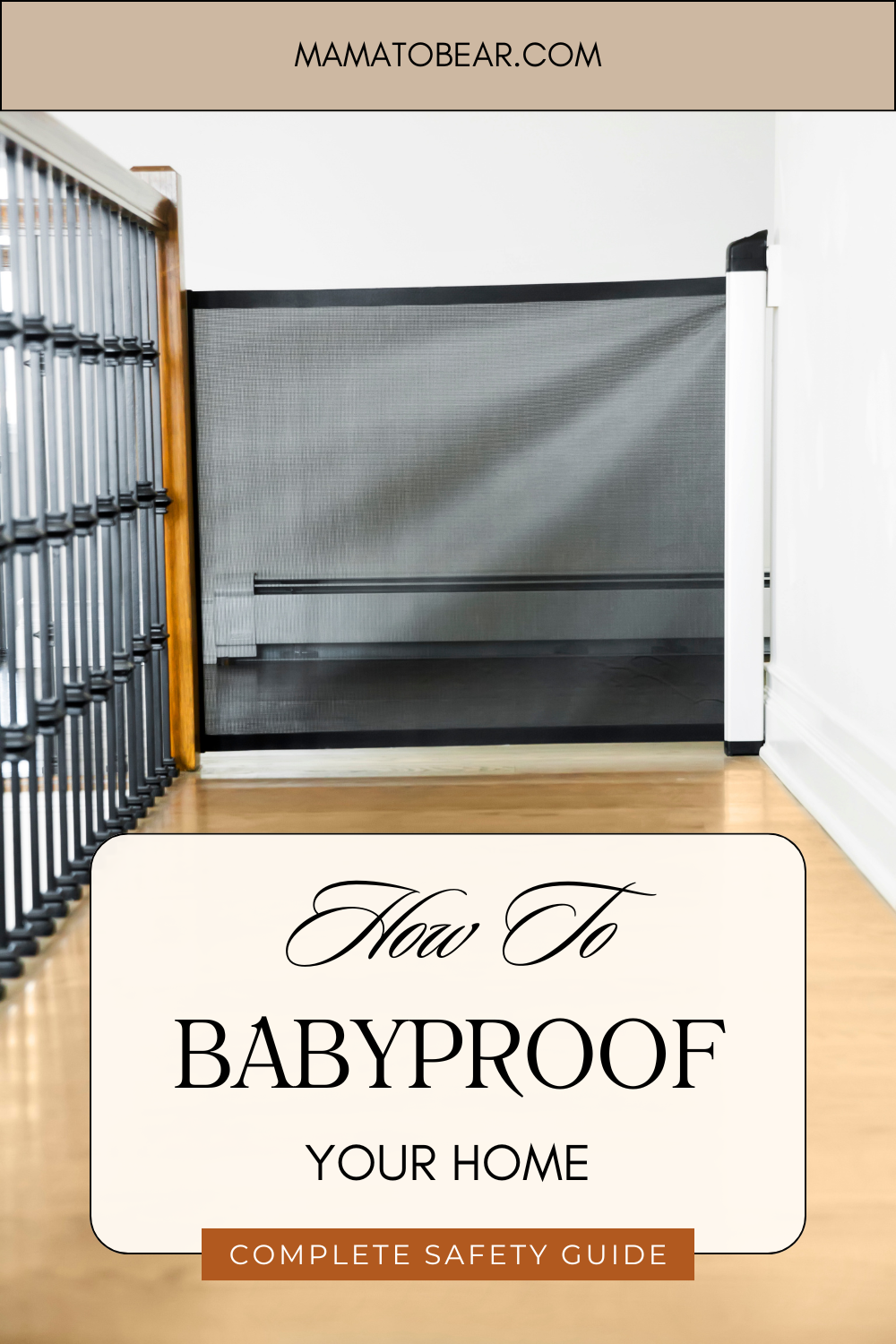
Baby Gate – This is a child-proof must have for those with stairs, one for the bottom and one for the top. A baby gate can also be used to section off parts of the house that you don’t want your baby in. This includes areas for pets or hard-to-baby-proof areas.
Locking Gun Cabinet – This is extremely important child-proofing measure for gun owners.
Closing Thoughts on Babyproofing Your Home
Babyproofing your home can feel overwhelming at first. Taking it room by room makes the process much more manageable. Once your baby starts crawling, pulling up, and exploring, even everyday household items can quickly become safety hazards.
Using the right baby proofing essentials and looking at your home from your baby’s perspective can help create a safer environment for your little one to learn and grow. Remember, no home will ever be perfectly child-proofed, but small changes can make a huge difference in keeping your baby safe.