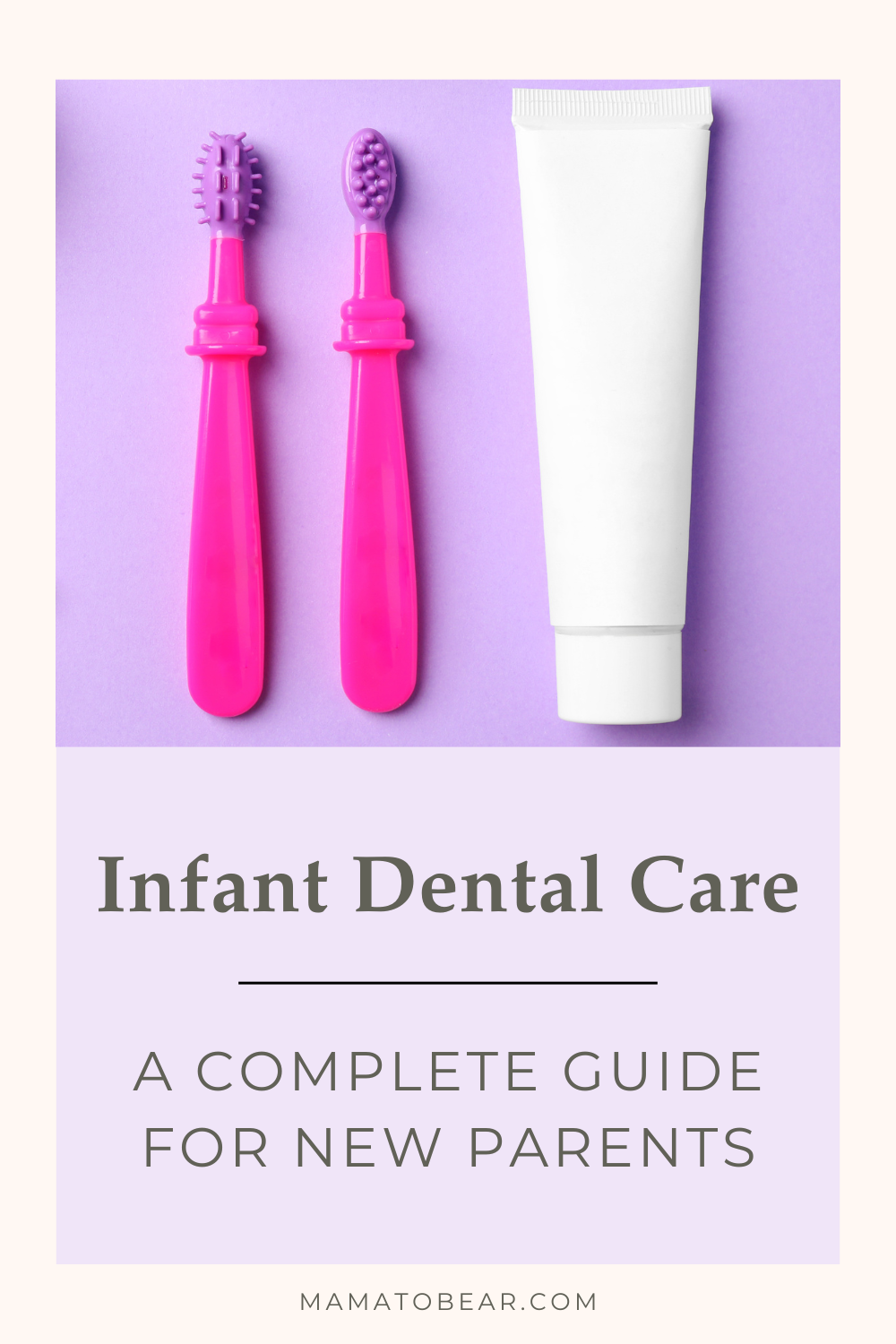
As a dental hygienist, I know how important dental care for babies from the get go. Taking care of your infant’s teeth is an important investment and responsibility. This complete infant dental care guide will walk new parents through everything they need to know about caring for baby teeth, from cleaning newborn gums to choosing the best toothbrush and toothpaste.
Though cavities aren’t the only oral-related focal point for caring for your baby’s teeth, it’s definitely a big one. Dental caries (or cavities) are the most common chronic childhood disease. 25% of children from the ages of 2-5 develop caries, and this number skyrockets to 50% once children become preschool aged.
Developing good brushing and flossing habits early makes a world of a difference, but it’s not always easy starting out. Read below about the best products and tips I’ve learned when taking care of my 10 month old’s teeth.
Keep in mind, this guide is aimed at caring for baby teeth at the infant stage. A toddler stage dental care guide will be available soon!
When Baby Teeth Come In
Many parents wonder when baby teeth come in and when they should begin an infant oral care routine. While most babies get their first tooth around 6 months, every child develops at their own pace. Some babies have teeth come in earlier, and some later. My baby’s teeth didn’t come in until he was 8 months old. Some are late bloomers, and that’s okay!
Usually the first teeth to erupt (this is what we call a tooth that is growing in) are the bottom two front teeth, called the central incisors. Below is a tooth eruption chart I created so that you can track the eruption of baby teeth and know when to expect the next set!

How and When Should I Start Brushing My Baby’s Teeth?
In short, you should start brushing your baby’s teeth as soon as their first tooth erupts. However, dental care for babies actually begins long before their first tooth appears.
How to Clean an Infant’s Mouth Before Teeth
Even before teeth erupt, baby oral care is important. Establishing good infant oral hygiene habits early can help reduce harmful bacteria and make brushing much easier once teeth arrive.
Special marketed tongue cleaning swabs exist to aid in cleaning your newborn or infant’s tongue, but these are not necessary.
Instead of using a toothbrush, most parents find it easiest to use a soft, damp washcloth to sweep over certain parts of their baby’s mouth. This includes the gums (where teeth will eventually be), the top of the tongue, and the insides of the teeth. Toothpaste is not necessary at this point. Repeat once a day, and twice a day is even better. Once in the morning, and once before bed. Instead of holding your baby, it may be easiest to lay your baby down while cleaning their mouth.
Babies who have their mouth cleaned in this manner regularly typically have less bacteria-associated oral problems in their infant years.
Most parents also find that this leads to an easier transition to brushing once teeth erupt due to already being desensitized to touching the inside of the mouth.
How to Brush an Infant’s First Teeth
Once teeth develop, it becomes important to develop a routine of brushing both in the morning after breakfast and at night after dinner. Most cavities develop at night while sleeping, so brushing before bed is extremely important to reduce the load of bacteria and sugars that sit on our baby’s teeth throughout the night.
Learning how to brush baby teeth properly from the beginning can help prevent cavities and create healthy habits that last a lifetime. Which toothbrush is best for infants? Which toothpaste is best for babies? What does a good dental routine for babies look like?
Features In The Best Toothbrushes for Babies
Different features may attract or deter parents when searching for the best toothbrush for babies.
- Material – Silicone toothbrushes are usually gentle, easy to clean, and therefore harbor less bacteria than plastic-based materials. Silicone toothbrushes that are flush in material are usually sterilizer-friendly.
- Softness – A gentle toothbrush is key for receptiveness from your baby, especially with sore gums and teething phases.
- Economically Friendly – Toothbrushes should be replaced at a minimum of every 3 months. Before investing in a single $20 manual toothbrush, consider how often you’ll need to repurchase the same toothbrush.
Best Toothbrushes for Infants
Choosing the best toothbrush for your baby might involve some trial and error, and that’s okay!
Keep in mind, these toothbrushes are tailored for infant mouths with adults behind the hand behind the toothbrush. Toddler-style toothbrushes will be included in the toddler dental care guide coming soon!
Silicone Finger Toothbrush
This was the very first “toothbrush” we tried on our infant. It’s easy to use, easy to clean, and the silicone bristles help relieve gum pain associated with teething.
We moved away from this style toothbrush after our baby developed both top and bottom teeth that can hurt our fingers when paired with a strong bite.
Silicone Baby Toothbrush
This baby toothbrush still provides teething relief with the silicone bristles while keeping your fingers out of those chompers’ way!
The suction cup base, removable gag guard, and sterilizer-safe capabilities make this toothbrush a great option for your baby.
360° Silicone Toothbrush
Double-sided and 360°-bristled toothbrushes provide an extra advantage when brushing your infant’s teeth and providing dental care for babies.
No doubt, your infant is instinctively going to bite down on a toothbrush while brushing. A toothbrush with the capabilities of brushing the top and bottom teeth at the same time might make this phase a little less frustrating.
Triple-Angle Toothbrush
Triple-angle toothbrushes have a unique configuration that allow you to reach the back, front, and tops of the teeth without having to over-angle your wrist. Again, this provides extra angles when your infant is trying to bite down when brushing.
The most common area for frequent plaque buildup is on the backs of the lower front teeth. A triple-angle toothbrush helps reach this area with ease.
If your infant has an excessive lip tie, triple-angle toothbrushes could cause discomfort around the front teeth. Ask your pediatrician or pediatric dentist if you are concerned about a lip tie.
Electric Toothbrush for Infants
In my experience, I’ve seen incredible results in children who use an electric toothbrush. I personally use an an electric toothbrush on my ten month old. Studies show that electric toothbrushes remove more plaque compared to manual toothbrushes.
This electric toothbrush features a suction cup base, a light that illuminates your baby’s mouth while brushes, and gentle ultrasonic vibrations that aid in easy plaque removal.
I’ve also found that the vibrations both ease gum pain and prevent my infant from biting down on the toothbrush while brushing more compared to a manual toothbrush.
Replacement heads are available for infant electric toothbrushes.
Best Toothpaste for Infants
Lots of thought can go into the best toothpaste for babies.
I wrote a post about the best toothpaste for babies that discusses the different types of ingredients you should and shouldn’t find in babies’ toothpaste, the use of fluoride or comparable alternatives (such as nano-hydroxyapatite), and links to specific toothpastes that meet my specific criteria as a dental hygienist and mom. Read that post now, then come back to this guide about dental care for babies!
As a quick reference, children less than 3 should use a rice-sized amount of toothpaste. Children over 3 (or as soon as they’re able to spit reliably) should use a pea-sized amount of toothpaste.
Do Baby Teeth Need To Be Flossed?
Not at first, but as soon as baby teeth start touching, they should be flossed!
Studies show that brushing only removed about 60% of plaque from our teeth. The remaining 40% is plaque that gets stuck in between our teeth where toothbrush bristles can’t fit. That’s where floss comes in handy and why it’s so important!
Flossing baby teeth might be difficult at first. These floss picks for kids help immensely since you’ll more than likely have difficulty using anything else. Some floss picks contain microscopic amounts of fluoride, which is great for getting between those teeth!
Floss picks for adults are usually cheaper per unit, but your little one may dislike the taste of mint. The ones linked above are flavored for kids, but unflavored options also exist as well!
Cavity-Causing Foods in Babies
As stated in my statistic above, cavities are the most common chronic childhood disease. Below are some tips to help prevent cavities in babies, also known as “baby bottle tooth decay.” Understanding what causes baby bottle tooth decay is an important part of preventing cavities in babies.
- Avoid foods that are sticky and high in sugar, such as juices, sodas, candy, and gummies.
- Avoid placing a bottle in your infant’s crib with anything but water. Cavities develop most often at night while we’re still and our saliva is stagnant. Cavities rapidly progress when sugars in milk, formula, and juice pool around the teeth for extended periods of time. This usually occurs when a baby falls asleep while “comfort sucking.”
- Avoid sharing utensils with your baby or using your saliva to “clean” pacifiers. Certain transmissible bacterias contribute to cavities.
When Should Babies Visit the Dentist?
According to the American Academy of Pediatrics, babies should have their first dental visit within 6 months of the first tooth erupting or by a year old, whichever is first.
Even if your baby doesn’t have any visible teeth by a year old, its important to still have a check up to ensure proper development and to desensitize your child to the dental environment.
More than likely this visit is going to consist of a very brief exam of your child’s mouth (usually while sitting on your lap) followed by oral hygiene instructions for parents. Your pediatric dentist will answer any concerns and questions about dental care for babies as well.
As a mother and dental hygienist, parents shouldn’t lose sleep if they can’t schedule a dental appointment “right on time.” My child’s pediatric dentist doesn’t even schedule checkups for babies until after they have had their first birthday unless a problem presents early. To avoid scheduling your child later than necessary, schedule the appointment several months ahead of time. Some dental offices are booked months in advance with limited availabilities.
Closing Thoughts on Dental Care for Infants
Good infant dental care starts long before all of your baby’s teeth arrive. By establishing a consistent baby oral care routine, choosing the right toothbrush and toothpaste, and scheduling your child’s first dental visit on time, you’ll be setting the foundation for a lifetime of healthy smiles.
Caring for baby teeth creates healthy habits that will benefit your child for years to come. In my dental hygiene profession, habits that are instilled in children at a young age makes all the difference in the world.